
Hackathon · 2024
Soul-Sync wellness app
A wellness app for daily breathing, meditation, and yoga, designed end to end at a hackathon.

01
The Challenge
SoulSync is a mobile wellness app for daily breathing, meditation, and yoga, designed end to end during a hackathon. The hard part was never the content. It was the habit. Most people download a meditation app, use it twice, and never open it again. So the real brief was not “build a meditation app,” it was designing the conditions that turn a one-time download into something people come back to.
How might we help someone build a daily mindfulness habit that survives a busy week, without nagging them into it?
02
Understanding the User
I started from the drop-off, not the features. Talking to people who had tried and quit wellness apps, the same pattern surfaced every time: the intention was real, but nothing in the product gave them a reason to return on day three.
I was genuinely into it for a week, then I just stopped opening it and never went back.
Every app drops me onto the same giant list of sessions. None of it feels like it is for me.
It started to feel like homework. One more thing I was failing at.
I had no idea if I was getting better, so why keep going?
Three insights shaped the entire product.
Generic onboarding loses people
If the app never learns why you are here, the home screen feels like a stock library and you never feel seen.
Effort needs to be visible
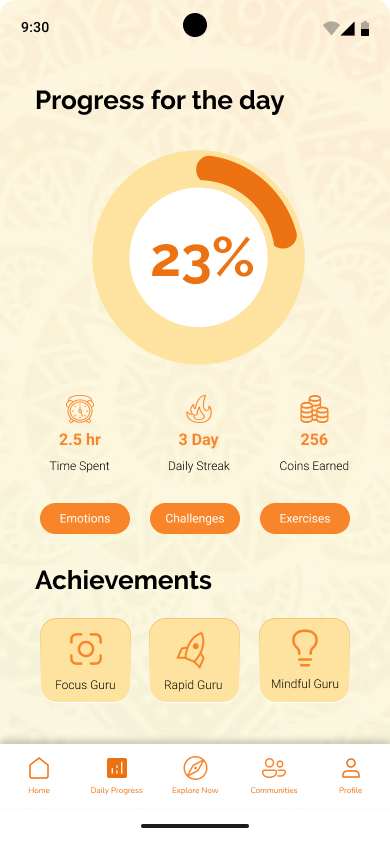
Without progress, a session is just a task. People stay when they can see momentum building behind them.
Habits stick with company
Going it alone makes quitting easy. A little social pull turns a solo app into a reason to show up.
03
Meet the Users
Two people kept me honest about who this was for. They want calm for different reasons, which made the trade-offs between “quiet and restful” and “motivating and rewarding” concrete.

Maya
27
Marketing professional, always on
Maya works in a fast marketing team and ends most days wired and unable to switch off. She has downloaded two meditation apps before, used each one for a few days, then forgot them. She wants calmer evenings and better sleep, not another thing to feel guilty about skipping.
Goals
- Wind down in the evening and sleep better
- Build a habit that survives a busy week
- Feel the app is about her, not a generic library
Frustrations
- Every app opens onto a wall of identical courses
- Sessions feel like one more task on the list
- Motivation fades the moment a streak breaks
04
Defining the Problem
Paid programs feel like a commitment, free video content is passive and endless, and most apps treat everyone the same. The gap is a product that personalizes from the first tap and makes consistency feel rewarding. So I framed a clear value proposition to design against.
Personal from tap one
Your goals shape the home screen before any course shows up.
Streaks worth keeping
Consistency you can see, so momentum does the motivating.
Progress you feel
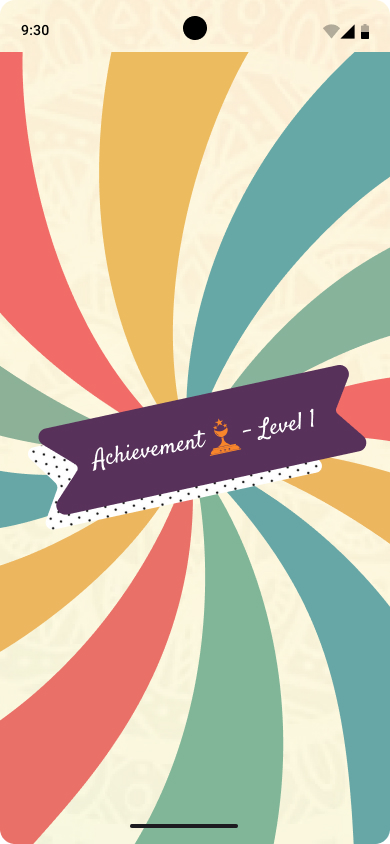
Achievement levels turn showing up into something earned.
Calm by design
Warm visuals that lower the temperature the moment you open it.
Better together
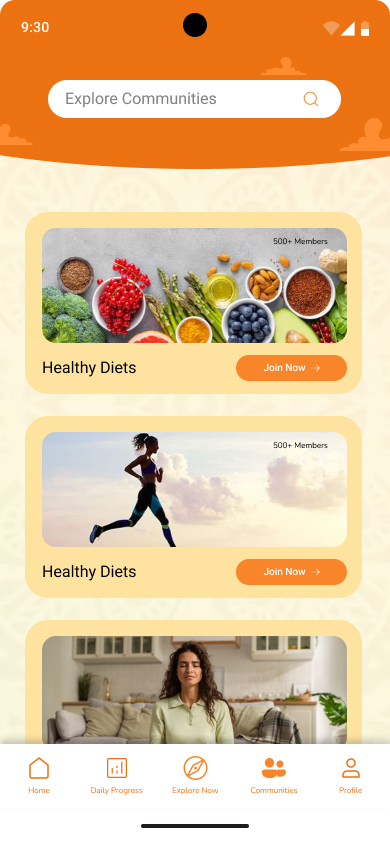
Communities and shared practice make the habit social.
A gentle nudge
One daily reminder you choose, not a stream of guilt notifications.
I also looked at how people currently build a mindfulness habit. Each option does part of the job, but none combines personalization, visible progress, and a social pull, which is exactly the space SoulSync goes after.
| Approach | Personalized | Visible progress | Social | Low pressure |
|---|---|---|---|---|
| Paid programs | ||||
| Free video content | ||||
| Generic meditation apps | ||||
| SoulSync |
05
The User Flow
Before any UI, I mapped the journey end to end so every screen had a job. The two moments that decide whether a habit forms are early: getting personalization right during onboarding, and making the daily loop of session, progress, and reward feel effortless. I designed those branches first to keep the happy path short.
Sign up or log in
Decision
New here?
Set up your profile
Pick a focus and a daily reminder
Land on a personalized home
Tailored to the goals you chose
Decision
Ready for today's session?
Do a breathing or meditation session
Track progress
Streaks, achievements, emotion check-in
06
Ideation
With the flow set, I sketched fast in low fidelity, working out how sign-up, onboarding, goal-setting, and the home screen could feel before committing to any visual direction. Hackathon speed meant deciding quickly and protecting the few moments that actually matter for the habit.
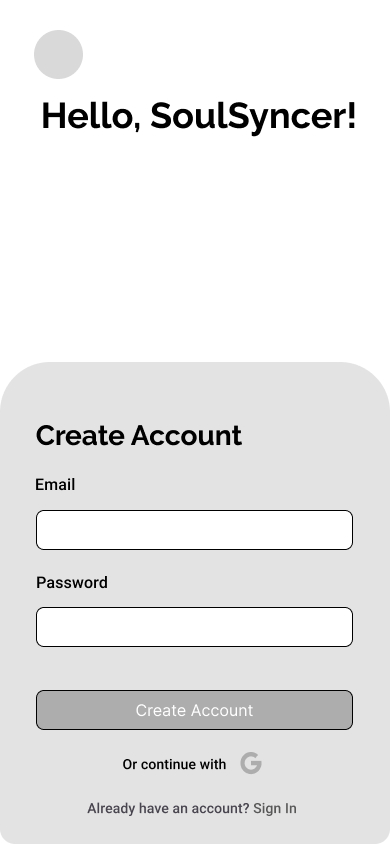
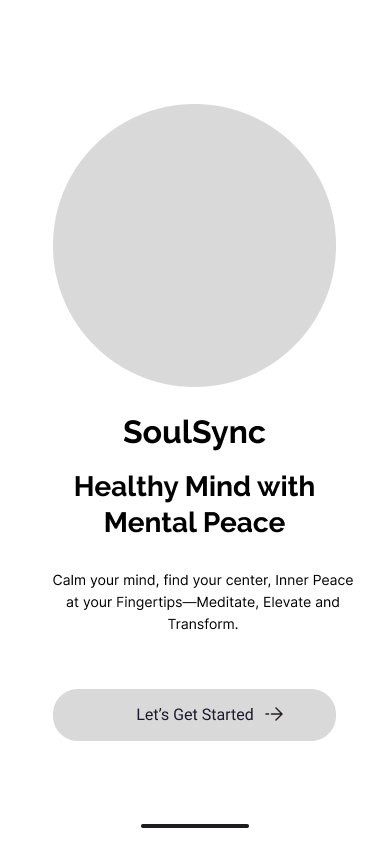
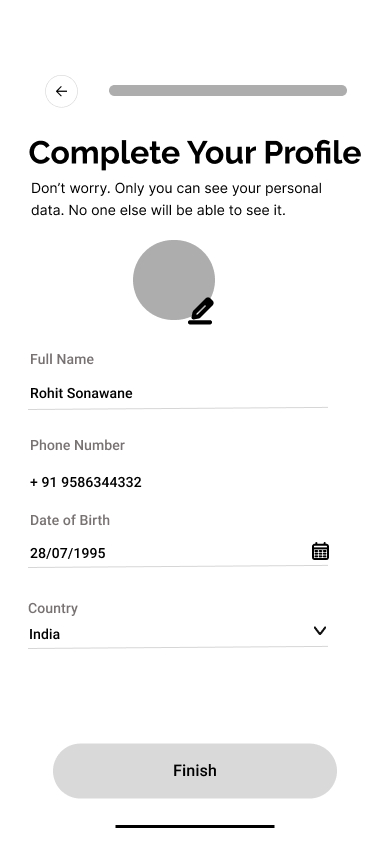
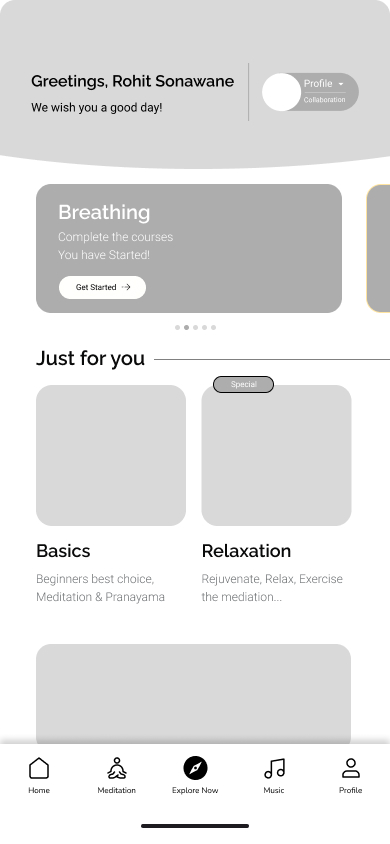
07
Wireframe to Screen
The low-fidelity home was plain blocks: a greeting, a “continue” card, and a recommended set. In high fidelity that same skeleton became a warm, personal home, a friendly greeting, a “Just for you” set built from your goals, and soft cards over a sunset gradient. Same structure, a completely different feeling. Drag the handle to compare.
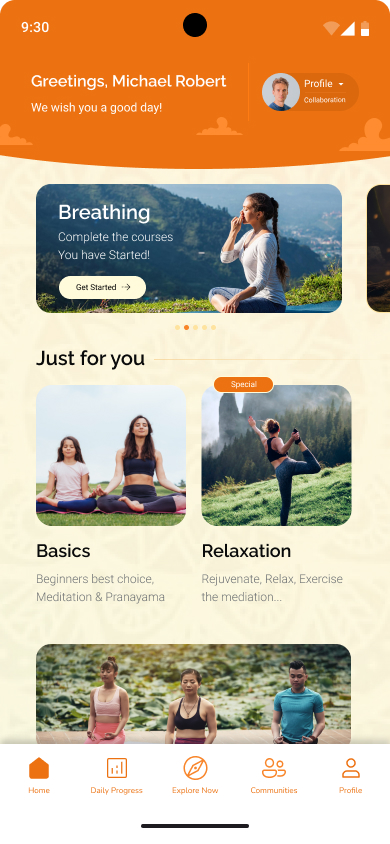 FinalWireframe
Drag to compare the wireframe and the final screen
08
Visual Design
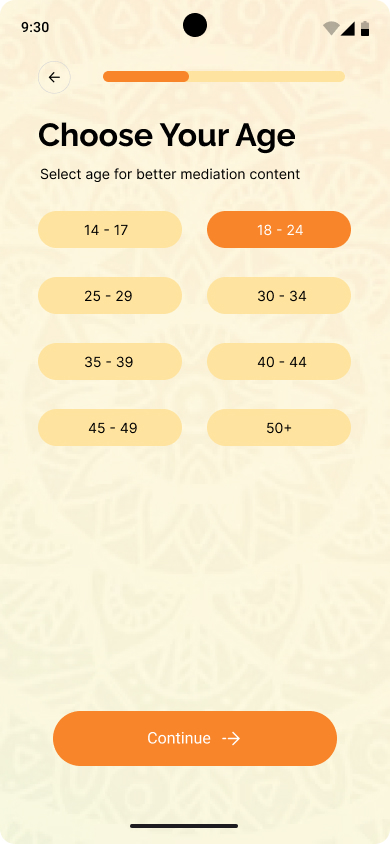
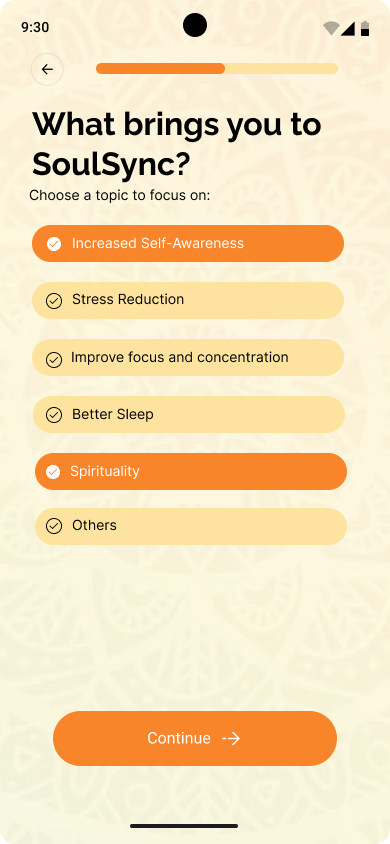
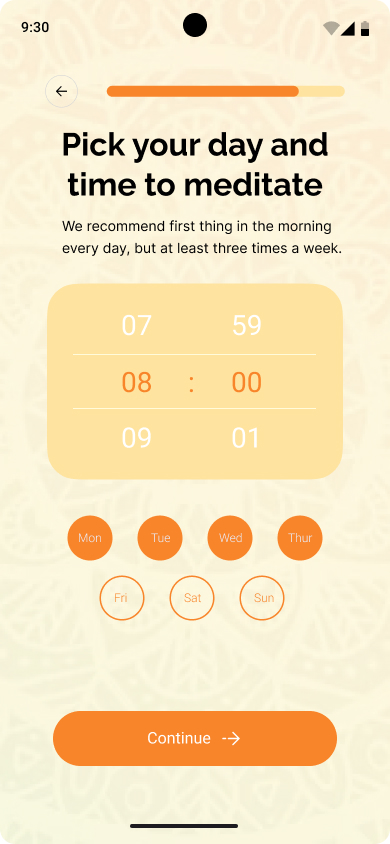
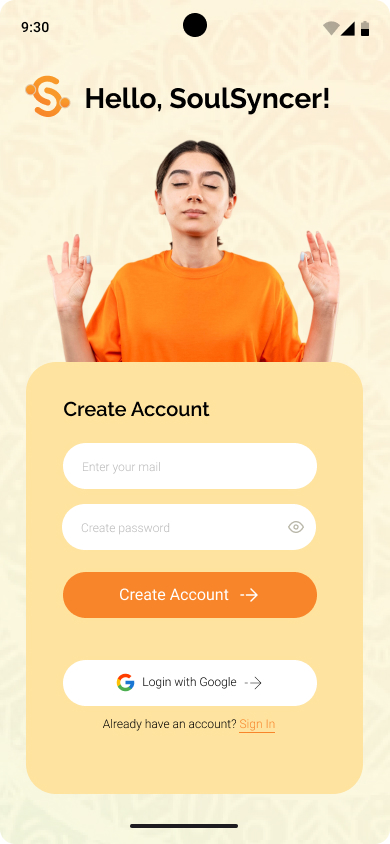
Only once the flow held up did I build the visual system. A warm, sunset-orange palette with generous spacing and soft, rounded cards, meant to feel calm and welcoming rather than clinical. The onboarding sets the tone, asking what you are here for before showing you anything.
Color
Sunset
#EA7317
Ink
#1C1917
Warm sand
#FBE7CE
Cream
#FFF7ED
Calm
#34A853
Slate
#78716C
Typography
09
Final Designs
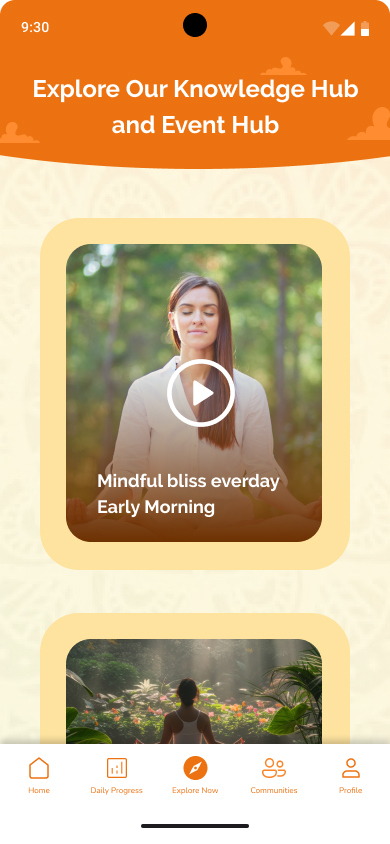
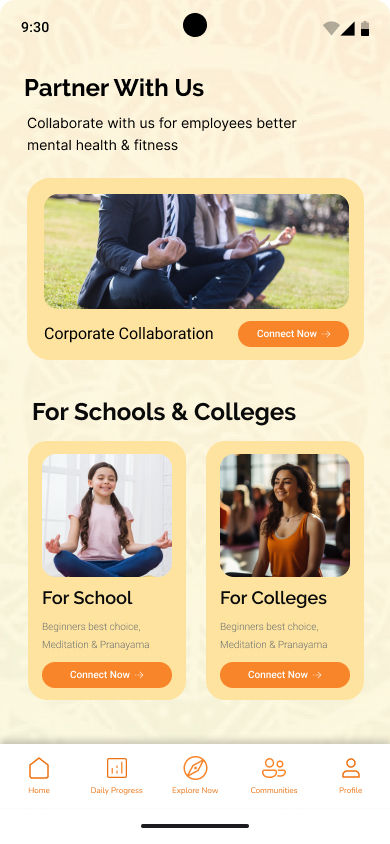
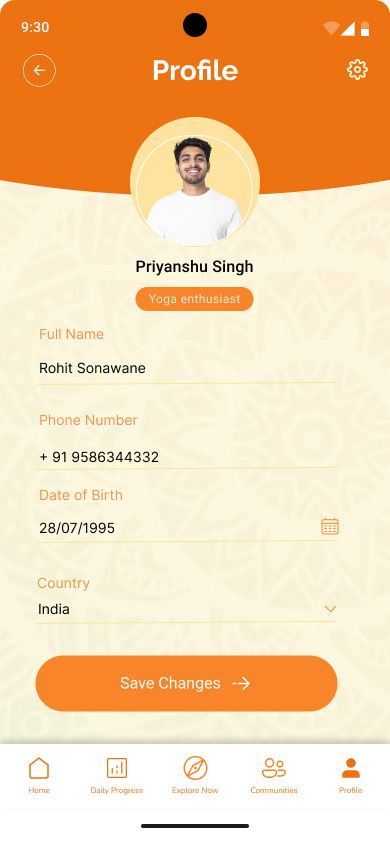
The high-fidelity screens carry the habit end to end: personalized onboarding, a warm home, explore and sessions, a progress tracker and achievement levels for momentum, and communities and a profile that turn a solo app into a small support system.
10
Outcome & Reflection
Back to the two people I started with.
Maya can now
Tell the app she is here to unwind and sleep better, open onto a home that reflects that, and lean on one gentle reminder instead of a guilt-trip when a streak slips.
Daniel can now
Start small, watch a streak and achievement levels grow, and feel the same visible progress that keeps him going at the gym, with a community to make it stick.
I took SoulSync from idea to a high-fidelity prototype inside a hackathon, owning the concept, the flow, the visual system, and every screen. The constraint was useful: it forced me to design for the few moments that actually decide whether a habit forms, rather than polishing a content library.
What I would do next
- Test the onboarding to see whether personalization actually lifts day-three return.
- Instrument the daily loop and measure where people drop before their first streak.
- Prototype the community and emotion check-in, then validate whether they pull people back.
The lesson stuck with me: a wellness app does not fail on visual design, it fails on motivation. If I took SoulSync further, I would validate the habit loop first, because a calm, beautiful app still loses you if there is no reason to open it tomorrow.
Want the full story behind this work?
Let's Chat